By Dagna Courtman, Permanent Makeup Artist at Dagna Courtman Permanent Makeup And Beauty
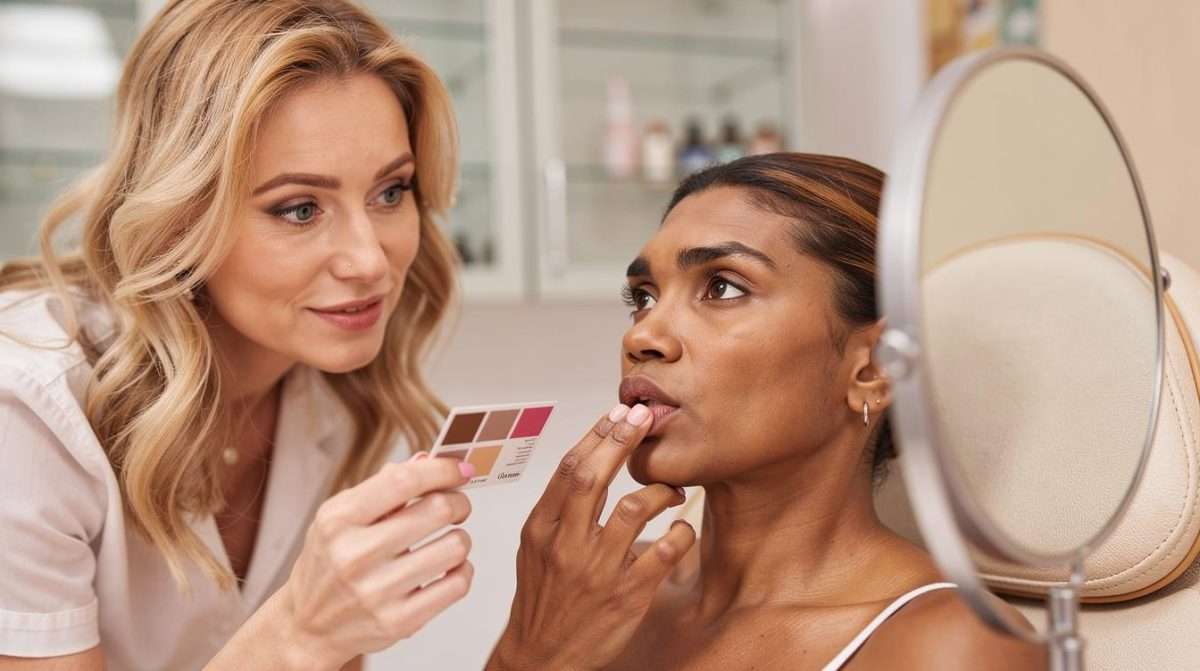
I use colour theory to balance cool or uneven lip pigmentation with carefully selected warm pigments, such as orange, peach or yellow. The choice depends on the lips’ depth of colour, skin tone and undertones. The aim is a lighter, brighter and more even tone, achieved progressively as the pigment settles and the skin heals.
Lip neutralisation is one of the most technically demanding permanent make-up procedures available, and colour theory sits at the very heart of it. Getting results right requires a thorough understanding of how pigments interact with the skin — not just what goes in, but what happens once it settles. Here, I want to walk you through the principles I apply every time I approach a lip neutralisation treatment.
What lip neutralisation colour theory actually means
At its core, lip neutralisation colour theory is about balance. The lips carry their own natural pigmentation, influenced by melanin levels, vascular visibility, and in some cases lifestyle factors such as smoking or sun exposure. When that pigmentation skews cool — appearing deep purple, blue-brown, or uneven — warm pigments are used to counteract those tones.
The principle follows the colour wheel. Warm tones such as orange, peach, and yellow sit opposite cool tones like blue and purple. When layered correctly into the skin, they cancel each other out, producing a more neutral, balanced result. This is not guesswork — it requires careful analysis before any pigment is selected.
It is also worth being clear about what neutralisation achieves. The goal is a lighter, brighter, and more even lip tone. The exact final shade cannot be guaranteed, because the pigment interacts with the client’s own melanin rather than simply sitting on top of the skin. I always explain this honestly before we begin.
Pigment selection and why it determines everything
Thoughtful pigment selection is the deciding factor between a successful neutralisation and one that either under-corrects or leaves an unwanted orange or ashy cast. The depth of the client’s lip colour, their skin tone, and the specific undertones present all inform which corrective pigment family is appropriate.
For deeply pigmented lips with strong blue or cool-brown undertones — more commonly seen in darker skin tones, though neutralisation is by no means exclusive to any ethnicity — an orange-based corrector typically provides the most effective foundation. For lips with lighter discolouration or a pink-grey cast, a peach or yellow-leaning pigment may be more suitable.
This is where my fine art background genuinely informs my work. Mixing and analysing colour is something I have done since studying at art school in Poland, and that visual literacy carries directly into how I read a client’s lip tone and select the right approach. No formula replaces a trained eye.
Melanin-rich lips also demand careful technique. Overworking the tissue can stimulate further pigmentation — the opposite of the desired outcome. I work with precision and restraint rather than force, always prioritising the skin’s response over speed.
What to expect across multiple sessions
Lip neutralisation is not a single-session result. Most clients require between two and four appointments, spaced six to eight weeks apart, to achieve the outcome we are working towards together. This spacing allows the skin to heal fully and the pigment to settle before the next step is assessed.
The first session focuses entirely on neutralising the dominant dark or cool tones. A finished result rarely emerges at this stage alone, and clients should not be discouraged if the lips look unusual in the days immediately following. Once healed, the true baseline becomes clear.
Subsequent sessions build on that foundation, refining colour and introducing warmth. The warm-based correctors used in earlier stages are gradually balanced with more flattering, skin-appropriate tones as the process progresses. By the final session, the lips typically appear noticeably more even, with a softer natural warmth replacing the heavy discolouration.
At Dagna Courtman PMU & Beauty, I guide every client through each stage with full transparency, so there are no surprises and every decision is made collaboratively. Understanding the science behind the process helps clients feel confident rather than uncertain about what they are seeing.
Frequently Asked Questions
Who is lip neutralisation most suitable for?
Lip neutralisation is well suited to anyone with dark, uneven, or cool-toned lip pigmentation. It is most commonly sought by clients with deeper skin tones, though it also addresses smoker’s discolouration and patchy lip colour across a range of skin types. A consultation is always required before treatment begins.
How does colour theory guide pigment selection in lip neutralisation?
Lip neutralisation colour theory uses the principle of complementary colours. Warm pigments — such as orange or peach — sit opposite cool tones on the colour wheel. Applying them into the lip tissue counteracts blue or cool-brown pigmentation. Accurate pigment selection depends on analysing the client’s specific undertones before any work begins.
Can the exact final lip colour be guaranteed?
No, and any practitioner who promises a specific final shade should be approached with caution. The pigment interacts with each client’s individual melanin, making the exact outcome variable. What can be confidently expected is a lighter, more even, and brighter lip tone — achieved progressively across multiple sessions.
Why are warm-based correctors used rather than neutral pigments?
Warm-based correctors are used because cool discolouration in the lips cannot simply be covered — it must be cancelled. Neutral pigments lack the warmth needed to counteract blue or deep-brown undertones effectively. Orange and peach tones are positioned on the colour wheel to directly oppose and neutralise those cooler shades at a pigment level.
Is lip neutralisation painful, and how long is recovery?
Topical numbing is applied before and during the procedure to keep discomfort minimal. The lips may appear darker and feel tender for several days following each session. Full healing typically takes two to four weeks, after which the settled pigment can be properly assessed ahead of any follow-up appointment.
How many lip neutralisation appointments will I need?
I usually plan for two to four appointments, spaced six to eight weeks apart. The first session focuses on neutralising the dominant dark or cool tones. Once the skin has healed and the pigment has settled, I can assess the baseline and use later sessions to refine the colour and introduce more flattering, skin-appropriate tones.