By Dagna Courtman, Permanent Makeup Artist at Dagna Courtman Permanent Makeup And Beauty
I assess whether the problem is uneven shape, unwanted colour, or excessive pigment before recommending correction. Warm-toned pigments can neutralise blue, purple, or grey tones, while very dark or saturated work may need saline or laser removal first. The aim is balanced, natural-looking colour, with the number of sessions depending on the existing pigment and skin.
You loved the idea of waking up with naturally tinted lips, and now you’re staring at a result that’s too dark, too cool, or just plain uneven. Lip blush correction is not a simple top-up: it requires colour theory, an honest assessment of existing pigment, and sometimes removal before anything new is added. Here’s what the process genuinely involves and what questions to ask before you book.
Why lip blush goes wrong in the first place
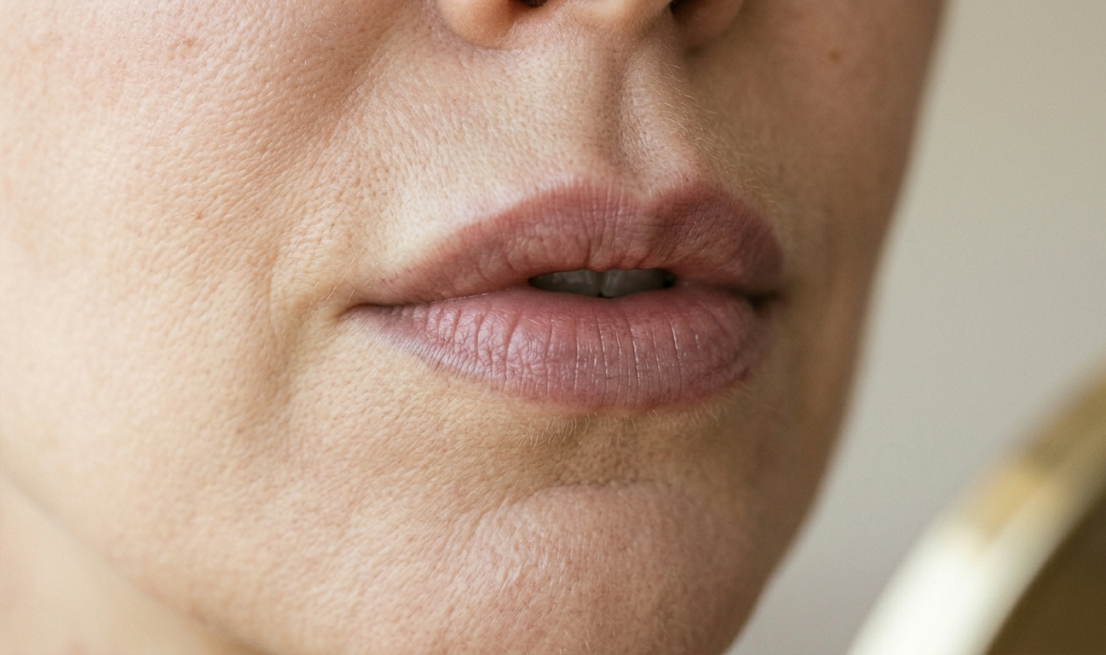
Most lip PMU correction cases fall into two categories: shape problems and colour problems. Shape issues usually come down to poor artist technique or a client requesting something that didn’t suit their natural lip line. Colour problems are more common and more varied: pigment that has aged into a grey or ashy tone, work that healed too cool, or original results that were simply the wrong shade from day one.
Colour shift over time is normal. Many lip pigments contain a mix of warm and cool tones, and as the warmer molecules break down faster, you’re left with whatever cool residue remains. That’s why so many healed lip PMU results look slightly blue, purple, or grey around the edges rather than the fresh berry or nude they started as.
Skin plays a significant role too. Your natural undertone, the depth at which the original pigment was implanted, and how your skin retains colour all determine what you’re working with before a correction even begins. There’s no universal fix, because there’s no universal starting point.
What colour correction for lips actually involves
Correcting dark lip pigment or ashy tones is an advanced technical skill, not a straightforward top-up. The principle is rooted in colour theory: warm pigments counteract cool ones. If your lips have healed with a blue or purple cast, an orange-based corrector is worked into the skin to neutralise it before a flattering final tone is applied over the top.
Complementary colours cancel each other out on the colour wheel, and the same logic applies here. A practitioner who understands this can shift the overall result significantly. One who doesn’t risks compounding the problem by layering more pigment on top of a colour that’s already fighting your skin tone.
It’s also worth understanding that skin holds a finite amount of pigment. Repeatedly adding colour to a saturated area doesn’t brighten the result; it can deepen and muddy it instead. This is why a careful assessment of how much pigment is already present is essential before any correction work begins.
When removal has to come before correction
Some lip blush corrections aren’t possible without reducing the existing pigment load first. If the original work is very dark, heavily saturated, or poorly placed, trying to correct over it is like painting over a wall that’s already had six coats applied. A clean result simply isn’t achievable.
In those cases, saline removal or laser removal is the recommended first step. Saline removal works by drawing pigment up and out of the skin over several sessions; laser breaks pigment down so the body can process it naturally. Neither is an instant solution, and both require healing time between sessions and before any correction pigment is introduced.
One technique that won’t help here is microblading. Running any stroking tool across an existing lip PMU result creates scar tissue, and the strokes disappear entirely into the background colour. It adds nothing to a correction and risks damaging the skin further.
What a realistic correction outcome looks like
Managed expectations are a genuine part of a good correction process. Depending on the original pigment, your skin undertone, and the depth of existing work, a single correction session may shift the colour noticeably but not completely. Some cases need two or three rounds, with full healing assessed between each one.
A well-executed dark lip correction, using warm-toned pigments to balance residual cool hues, can deliver a genuinely natural result: lips that look flushed, defined, and warm rather than stained or artificial. The goal is balance, not coverage.
Shape corrections follow a different logic. Where pigment has bled slightly outside the natural lip line or the original mapping was asymmetrical, a skilled practitioner can use removal techniques on specific areas and reapply to the corrected boundary. It’s painstaking work, but it’s achievable.
The most useful thing you can bring to a consultation is clear photographs of your current result in natural light, from multiple angles. That’s what makes an accurate assessment possible, and an accurate assessment is where every good correction starts.
Frequently Asked Questions
Can all lip blush corrections be done without removal first?
Not always. If the existing lip PMU is very dark or heavily saturated, adding more pigment will muddy rather than improve the result. In those cases, saline or laser removal is needed first to reduce pigment load before any corrective colour work can be applied effectively.
Why has my lip blush healed with a blue or grey tone?
Warm pigment molecules break down faster than cool ones over time, leaving a blue, purple, or grey residue. This is one of the most common lip PMU correction cases. A warm-toned corrector pigment, applied using colour theory principles, can neutralise those cool tones before a final shade is placed.
How many sessions does a lip blush correction typically take?
It depends on how much existing pigment is present and how far the colour needs to shift. Some cases resolve in one correction session plus a follow-up; others need two or three rounds with full healing time between each. A thorough consultation and assessment of the existing work gives the clearest indication.
Can microblading be used to correct lip PMU?
No. Microblading on lips creates scar tissue and any strokes disappear into the background colour of the existing pigment. It adds nothing useful to a lip blush correction and carries a real risk of damaging the skin. Colour correction and, where necessary, removal techniques are the appropriate approaches.
What determines how successful a dark lip correction will be?
Three factors matter most: the depth at which the original pigment was implanted, your natural skin undertone, and how saturated the existing work is. Darker, deeper original work is harder to shift. A practitioner with strong colour theory knowledge can give you a realistic assessment of what’s achievable before any work begins.
What should I bring to my lip blush correction consultation?
I recommend bringing clear photographs of your current lip blush in natural light, taken from multiple angles. These images help me assess whether the concern is uneven shape, unwanted colour, or excessive pigment. An accurate assessment of the existing work is the starting point for deciding whether correction or removal is appropriate.