By Dagna Courtman, Permanent Makeup Artist at Dagna Courtman Permanent Makeup And Beauty
I advise keeping lips clean and moisturised, gently cleaning them for the first five days and then maintaining regular moisture. Avoid picking, rubbing, peeling, swimming, saunas, steam, prolonged water exposure, sun, and cosmetics during the ten-to-fourteen-day healing period. Use a thin layer of healing balm and wait four to six weeks before judging the result.
You’ve just had your lip blush treatment and the colour looks vivid. Now comes the part that actually determines your result. The healing period after any lip tattoo is where your investment is either protected or compromised, and what you do in the next ten days matters more than most people realise. This article walks you through exactly what to expect and how to care for your lips at every stage.
What happens to your lips during the healing process
Immediately after a lip blush treatment, your lips will look noticeably darker, fuller, and more intense than the finished result. That’s completely normal. The top layer of skin holds the pigment temporarily before it begins to shed, which is why the colour appears to drop by 30 to 50 per cent before it settles.
Between days three and seven, your lips will feel dry and the surface skin will start to flake. This is the stage where people most often make mistakes. Picking, rubbing, or peeling the skin prematurely pulls pigment out with it, leaving patchy, uneven colour that no amount of aftercare can fix at that point.
By day ten to fourteen, the peeling has usually finished and the true colour begins to surface. The full healed result isn’t visible until four to six weeks have passed. What you see at six weeks is what you actually have.
The daily aftercare routine your lips need
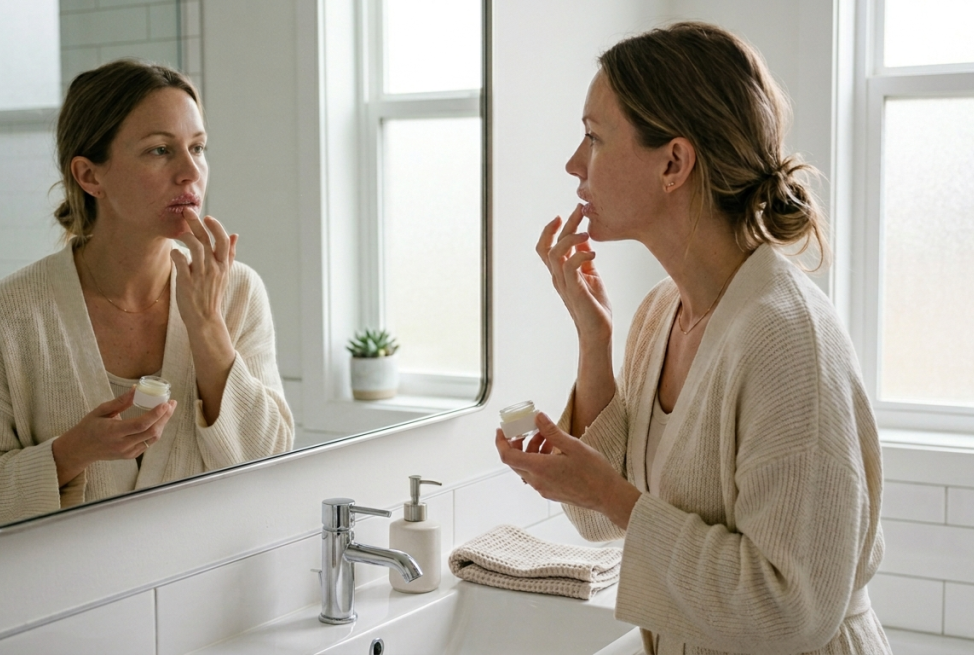
Keeping the area clean and moisturised is the foundation of good lip tattoo care. For the first five days, gently dab your lips two to three times daily with a clean damp cotton pad to remove any lymphatic fluid that builds up on the surface. This fluid, if left to dry, forms a thick crust that can pull pigment when it eventually lifts.
After cleaning, apply a thin layer of the healing balm provided to you. Less is more here. A thick coating traps moisture and can soften the skin unevenly, which interferes with how the pigment sets. Coconut oil or pure lanolin are both reliable alternatives if you run out of your provided product.
From day five onwards, focus on keeping the lips consistently moisturised. The skin is delicate and prone to cracking during this phase. A gentle, fragrance-free lip balm applied regularly will support the final stages of healing without irritating the area.
What to avoid during the healing period
There’s a short but important list of things that directly interfere with how your lip blush heals, and most involve water and friction. Avoid swimming, saunas, steam rooms, and any prolonged water exposure for at least ten days. Even long hot showers that direct steam onto your face can soften the healing skin too quickly.
Sun exposure is a serious concern. UV light breaks down pigment, and freshly tattooed skin is especially vulnerable. Keep your lips out of direct sunlight throughout the healing period and, once healed, use an SPF lip balm consistently to protect the colour long-term.
- No picking, rubbing, or peeling of any flaking skin.
- Avoid lipstick, lip gloss, and any cosmetic product on the lips for the first ten days.
- Skip spicy, salty, or very acidic foods for the first week as these can irritate the healing tissue.
- No kissing or friction on the lip area for at least five to seven days.
- Avoid dental procedures or anything that stretches the mouth significantly for the first two weeks.
- Don’t apply anything containing retinol, AHAs, or BHAs near the lips until fully healed.
If you’ve had cold sores before, a lip tattoo can trigger an outbreak because the treatment stimulates the nerve endings where the herpes simplex virus lies dormant. It’s worth speaking to your GP about a course of antiviral medication to take around the time of your appointment if this applies to you.
How to read your healing result and when to book a top-up
At four to six weeks, you’ll be able to see exactly how your lip blush has healed. Some areas may have retained colour beautifully; others might look lighter or slightly uneven. This isn’t a sign that something went wrong. Lips are notoriously variable in how they absorb pigment, partly because of the movement involved and partly because lip skin is thinner and more reactive than facial skin.
A perfecting session, booked at six to eight weeks, is where any gaps, uneven patches, or areas that need more depth are addressed. Consider this session part of the original treatment rather than a correction. It’s built into the process precisely because no single session can account for how each individual’s skin will retain pigment.
Lip blush typically lasts two to four years depending on your skin type, lifestyle, and how well you protect the colour from sun exposure. People with oilier skin tend to find the pigment fades faster. Regular touch-ups every one to two years keep the colour fresh and the shape defined. Related techniques such as lip liner definition can be incorporated at a later stage if you want to refine the border further once you’ve seen your healed result.
Frequently Asked Questions
How long does lip blush aftercare last?
The active aftercare period for lip blush is ten to fourteen days, covering the full peeling and initial healing phase. You should avoid sun exposure, swimming, and cosmetics on the lips throughout this window. After that, a simple SPF lip balm used regularly is enough to protect your colour long-term.
Can I eat and drink normally after a lip tattoo?
You can eat and drink, but avoid spicy, very salty, or acidic foods for the first week as these can irritate healing lip skin. Hot drinks should be taken carefully to avoid prolonged steam contact with the lips. A straw is useful for the first few days to minimise direct contact with the treated area.
Why does my lip blush colour look so much lighter after peeling?
It’s normal for lip blush colour to appear significantly lighter once the surface skin has shed. The pigment sits deeper in the skin at this stage and looks muted until the skin fully settles. The true healed colour becomes visible at around four to six weeks, so don’t judge your result before then.
What should I put on my lips while they’re healing?
Use the healing balm provided by your practitioner for the first ten days, applying a thin layer two to three times daily after gently cleaning the area. Pure lanolin or fragrance-free coconut oil are good alternatives if needed. Avoid anything containing retinol, fragrances, or exfoliating acids until your lips are fully healed.
When can I wear lipstick after a lip blush treatment?
Wait at least ten days before applying any lipstick, lip gloss, or cosmetic product to the lips. Applying products too early introduces bacteria to healing skin and can interfere with how the pigment settles. Once healed, most lip products are fine to use, though a gentle touch and clean applicators are always best practice.
What should I do if I have had cold sores before lip blush?
If you have had cold sores before, I recommend speaking to your GP about a course of antiviral medication to take around your appointment. Lip tattoo treatment can trigger an outbreak because it stimulates the nerve endings where the herpes simplex virus lies dormant.