By Dagna Courtman, Permanent Makeup Artist at Dagna Courtman Permanent Makeup And Beauty
I choose a lip blush colour by considering your skin undertone, natural lip pigmentation and desired intensity. Warm undertones generally suit coral, peach and brick tones, while cool undertones harmonise with rose, mauve and berry shades. I also consider your daily routine and how the pigment will soften during healing before selecting the final colour.
You’ve decided you want a lip tattoo, and now you’re staring at a colour chart wondering how any of it translates onto your actual face. It’s a genuinely tricky decision, because the shade sitting in a pigment pot looks nothing like the shade healed into your lips. This article walks you through the three things that actually determine which lip blush colour will work for you, so you sit down for your appointment with clarity rather than anxiety.
Why your skin undertone is the starting point
Undertone is the subtle warmth, coolness, or neutrality sitting beneath your surface skin colour. It doesn’t change with a tan, and it’s entirely separate from whether you’d describe yourself as fair, medium, or deep. When undertone is ignored in lip blush colour selection, the healed result can look off: slightly grey, weirdly orange, or oddly disconnected from your face.
Warm undertones (golden, peachy, yellow-based) tend to suit lip blush shades built on coral, terracotta, warm nude, or brick tones. Cool undertones (pink, blue, or red-based) usually harmonise better with berry, rose, mauve, and cool-nude pigments. Neutral undertones sit comfortably in the middle and have the widest range of workable shades, from dusty rose to soft brown-pinks.
One way to read your undertone at home: look at the veins on the inside of your wrist in natural daylight. Blue-purple veins typically signal cool; green veins suggest warm; a mix of both points to neutral. It’s not a perfect science, but it’s a useful starting point before your consultation.
Your natural lip colour changes everything
Lip blush works by depositing pigment into the lip tissue, but it doesn’t cover what’s already there. It works with it. A deeply pigmented lip will neutralise lighter shades; a very pale lip will show the pigment closer to its true tone. This is why the same lip tattoo shade can look dramatically different on two people.
If you have naturally dark or uneven lips, a correction step is often the smarter approach. Some practitioners use a peach or orange-based neutralising pigment in a first session before adding the final colour. This corrects strong underlying pigment before the blush shade goes in, producing a far truer result. It’s worth raising during your consultation if your lips are significantly pigmented or have notable asymmetry in tone.
Lips that are naturally pale or pink with very little pigment tend to be the most predictable canvas. The chosen pigment heals close to what was selected, with less risk of the underlying colour competing with it.
Deciding on intensity: everyday wearable versus statement colour
Lip blush colours exist on a spectrum from barely-there tints to genuinely bold, saturated shades. Where you want to land on that spectrum is personal, but it helps to think about it before you walk in rather than pointing vaguely at a chart on the day.
A softer, lower-saturation result, think a flushed version of your own natural lip colour roughly 30 to 50 percent more defined, suits people who want the look of healthy lips without anything that reads as obvious makeup. These tones tend to fall in the dusty rose, soft nude-pink, or warm taupe-pink family depending on your undertone. They’re also more forgiving as the pigment lightens during healing.
A bolder, more saturated lip blush sits closer to the look of a sheer lipstick worn daily. Deeper berries, warm reds, and rich mauves fall into this territory. These work beautifully on deeper skin tones where a subtle shade would be lost entirely, and they can genuinely replace the need for daily lip colour. Bold shades require more precision in application and are harder to adjust if your preferences change over time.
Intensity also connects to longevity. Darker pigments tend to retain their presence a little longer before the soft fade that all lip blush eventually experiences. A very light, sheer shade may need a touch-up sooner, typically around 12 to 18 months, while richer shades can hold their depth closer to two years before a refresh is worthwhile.
What a good consultation actually covers
Colour selection isn’t something you should be doing alone from a photo. A proper consultation maps your undertone, assesses your natural lip pigmentation, and discusses your lifestyle: what you wear, whether you use lip products daily, and what result would genuinely make your life easier. From there, a practitioner can mix or select a pigment that accounts for all three factors.
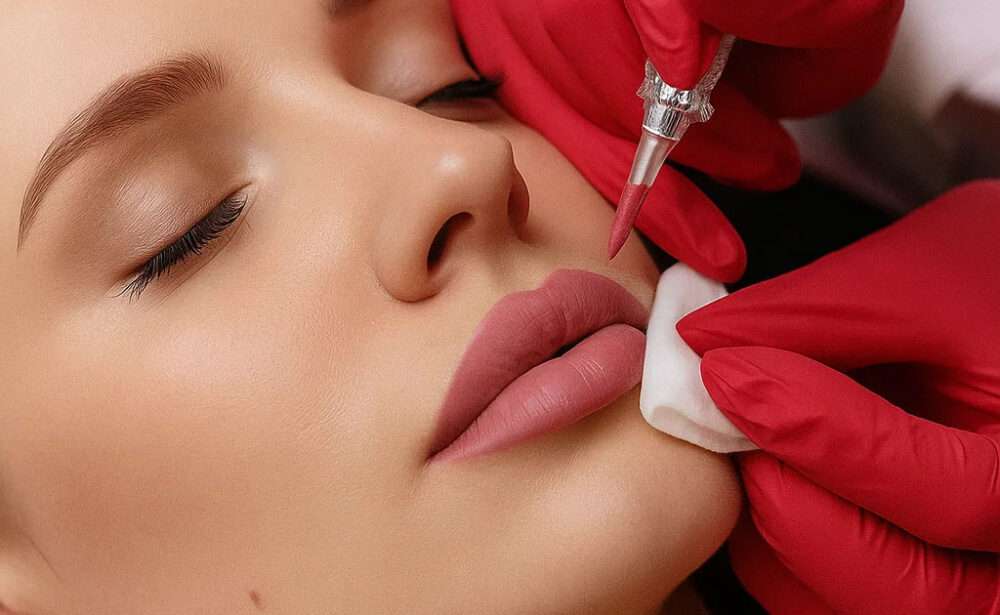
I always spend time on this stage, because the difference between a colour that looks right on paper and one that actually suits you once healed comes down to these details. Swatching pigment on the inner lip before committing gives a rough preview, though it looks more saturated fresh than it will healed. Expect the final result to be 30 to 40 percent softer than it appears immediately after the procedure.
If you’re considering a more defined edge alongside your colour, it’s worth knowing that a tattooed lip liner border is rarely recommended today. The vermilion border is a delicate area, and a hard line can look dated as styles shift. Lip blush applied with a soft, slightly diffused edge tends to age far more gracefully and looks more natural at every stage of the healed result.
Frequently Asked Questions
Can I choose any lip blush colour I like, or am I limited by my skin tone?
You have real flexibility, but your skin undertone does narrow the field of flattering options. Warm undertones typically suit coral, peach, and brick-based shades, while cool undertones lean towards rose, mauve, and berry tones. Working with your undertone rather than against it means the healed result looks like your lips, only better.
Why does lip blush colour look so different after healing?
Freshly applied lip blush looks significantly more saturated and bold than the healed result. The skin’s healing process softens the pigment by around 30 to 40 percent. This is normal and expected. A skilled practitioner chooses pigment with this fade in mind, so the final healed colour lands exactly where it should rather than appearing too intense.
Do darker skin tones need different lip tattoo shades?
Yes. On deeper skin tones, subtle or very light lip blush colours can disappear entirely once healed, because the underlying lip pigmentation overwhelms them. Richer, more saturated shades in warm reds, deep berries, or mahogany-rose tones tend to work far better, delivering visible definition and colour that complements rather than clashes with deeper natural pigmentation.
What if I have uneven or very dark natural lip pigmentation?
Uneven or heavily pigmented lips often benefit from a colour correction session before the final lip blush shade is applied. A peach or orange-toned neutralising pigment is tattooed first to balance the underlying darkness. Once healed, the chosen blush colour is applied over the top, producing a far truer and more even result than attempting colour in a single session.
How do I decide between a natural lip blush colour and a bolder shade?
Think about your daily routine. A natural blush that mimics your own lip colour at its best suits people who want low-maintenance, barely-there definition. A bolder shade suits those who currently wear lip colour most days and want to simplify that step. Either way, your lip blush colour selection should feel like an upgrade on your natural lips, not a departure from them.
Can I preview the lip blush colour before committing to it?
I can swatch the pigment on your inner lip before committing, which gives you a rough preview. It will look more saturated when fresh than after healing, so I also account for the expected softening. The final result is typically 30 to 40 percent softer than the immediate post-procedure colour.